How Couples Repair After Conflict
Repairing connection after disagreement and rebuilding trust.
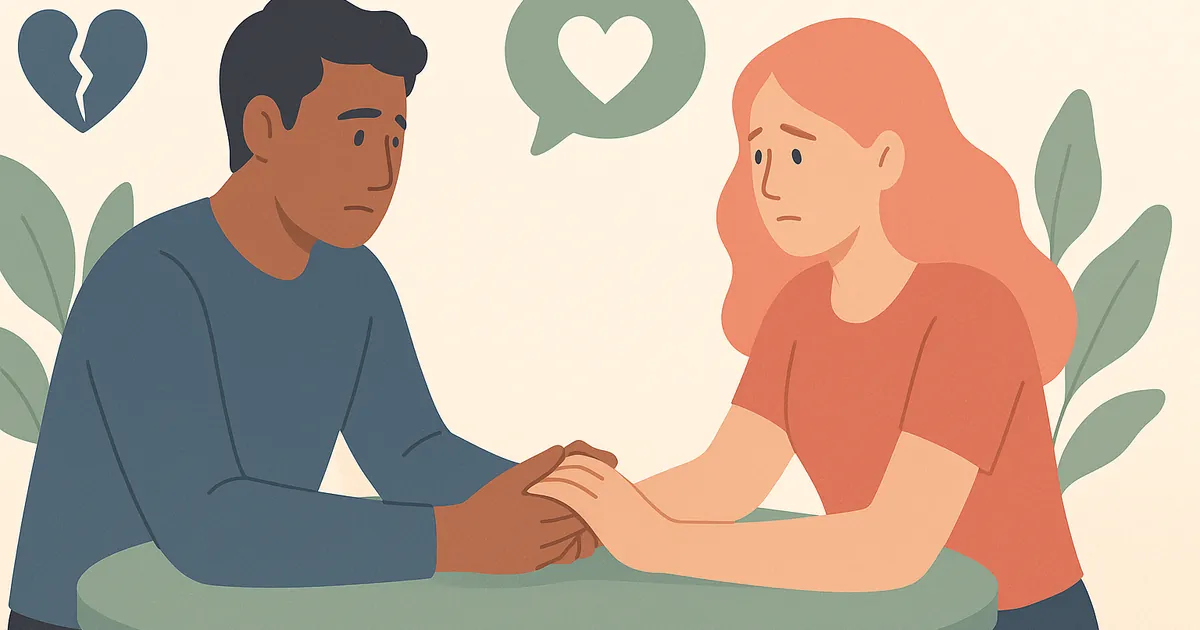
Conflict Repair for Couples: How to Reconnect After a Fight
You've had the fight. Maybe voices were raised, or maybe it was that cold, silent distance that feels even worse. Now you're both exhausted, hurt, and unsure how to find your way back to each other. The argument might be over, but the emotional aftermath lingers like smoke in the room. You want to fix it, but you don't know where to start—and you're worried that bringing it up again will just reignite the flames.
Here's what most couples don't realize: the argument itself isn't what determines the health of your relationship. It's what happens next. Conflict repair—the intentional process of reconnecting, rebuilding safety, and restoring trust after a disagreement—is the skill that separates couples who grow stronger through conflict from those who let resentment calcify between them.
The good news? Repair doesn't require perfection. It doesn't mean you need to resolve every issue or agree on everything. It means creating a bridge back to each other, even when you're both still hurting. Let's explore exactly how to do that.
Why Conflict Repair Matters More Than the Fight Itself
Research shows that successful couples aren't the ones who never fight—they're the ones who repair effectively. Dr. John Gottman's studies found that repair attempts during and after conflict are one of the strongest predictors of relationship satisfaction and longevity.
When repair doesn't happen, conflicts pile up. Small hurts become big wounds. Partners start walking on eggshells or withdrawing entirely. The relationship shifts from "us against the problem" to "me against you."
Repair breaks that cycle. It signals: I see you. I value us. This fight doesn't define our relationship.
The Anatomy of Effective Conflict Repair
1. Create a Cooling-Off Period (But Not Radio Silence)
Before you can repair, you both need to get out of fight-or-flight mode. Agree on a specific time to reconnect—ideally within 24 hours. This isn't avoidance; it's intentional space.
Try this: "I need some time to calm down, but I want to talk about this at 7pm tonight. Does that work for you?"
This approach prevents the pursuing-distancing pattern where one person wants to resolve immediately while the other needs space, creating a secondary conflict on top of the original one.
2. Take Ownership of Your Part
Repair starts with accountability. Not "I'm sorry you felt that way" or "I'm sorry, but you..." Real ownership means naming your specific actions and their impact.
Examples:
- "I raised my voice and that wasn't okay. I know that made you feel unsafe."
- "I shut down instead of telling you what I needed. That left you guessing and feeling rejected."
- "I brought up past issues instead of staying focused on what was actually bothering me right now."
Notice these statements focus on behavior, not character. You're not saying "I'm a terrible person"—you're acknowledging specific actions you can change.
3. Express Understanding Before Explaining
The most common repair mistake? Jumping straight to your perspective before your partner feels heard. Even if you disagree with their interpretation, acknowledge their emotional experience first.
The formula: "What I'm hearing is that when I [action], you felt [emotion]. Is that right?"
Once your partner confirms you understand their experience, then you can share yours. This creates safety for both perspectives to coexist.
4. Identify the Underlying Need
Most fights aren't really about the dishes, the schedule, or whose family to visit for the holidays. They're about unmet needs for respect, security, autonomy, or connection.
Repair conversation prompt: "Looking back, I think what I really needed was [need]. Next time, what would help me is [specific request]. What did you need in that moment?"
This transforms the fight from a battle over who was right into a collaborative problem-solving session.
5. Make a Repair Gesture
Sometimes words aren't enough. Small actions that say "I'm thinking of you" or "We're okay" can rebuild connection faster than another conversation.
Repair gestures might include:
- Making their coffee the next morning
- Sending a text: "Still processing, but I love you"
- Suggesting a walk together
- Initiating a gentle touch or hug (if that feels right for both of you)
- Planning something they enjoy for the weekend
These gestures work because they break the emotional gridlock and signal that the relationship is bigger than the conflict.
When Repair Gets Stuck
Sometimes you try to repair and it doesn't land. Your partner isn't ready, or you're still too activated. Here's what to do:
If you're the one attempting repair: "I can see you're not ready yet. I'm here when you are. Can we try again tomorrow morning?"
If you're receiving a repair attempt but aren't ready: "I appreciate you trying. I need a little more time. Can we talk at [specific time]?"
If the same conflict keeps repeating: This might be a sign that you need deeper conversations about patterns, not just individual fights. Consider whether there are unaddressed expectations or needs that keep surfacing.
Building a Repair Ritual
The couples who repair best have established practices—small rituals that help them reconnect after conflict:
- A weekly check-in where you process any unresolved tension before it builds
- A shared phrase that signals "I want to repair" (like "Can we start over?")
- A physical location in your home designated for difficult conversations (neutral territory, not the bedroom)
- A commitment to never go to bed angry without at least acknowledging the conflict exists
These rituals remove the guesswork from repair and create predictable pathways back to connection.
The Long-Term Impact of Repair Skills
Couples who master conflict repair report:
- Feeling safer expressing disagreement
- Less fear of conflict escalating beyond repair
- Deeper trust that difficult conversations won't threaten the relationship
- More authentic connection because they can show up fully, not perfectly
Repair doesn't erase the conflict—it integrates it. You learn that you can hurt each other and still choose each other. You can disagree and still belong to one another. That's not just conflict resolution. That's relationship resilience.
Your Next Step
If you're reading this in the aftermath of a fight, take a breath. You're already doing the work by seeking tools instead of staying stuck. Start with one repair attempt—even an imperfect one. "I don't want us to be stuck here" is a valid beginning.
And remember: repair is a skill, not a talent. Every couple can learn it. Every relationship deserves it.
FAQ
- How long should we wait before trying to repair after a fight?
- Ideally, initiate repair within 24 hours, but the exact timing depends on your individual regulation needs. Some people can repair after 30 minutes; others need several hours to calm their nervous system. The key is agreeing on a specific time to reconnect rather than leaving it open-ended, which can feel like avoidance or punishment. If one partner needs more time, they should name when they'll be ready: 'I need until tomorrow morning, can we talk over breakfast?'
- What if my partner refuses to engage in repair conversations?
- Persistent refusal to repair can indicate deeper issues like conflict avoidance, contempt, or feeling chronically misunderstood. Start by examining the repair environment: Are these conversations happening when you're both calm? Are you leading with curiosity instead of blame? If you've created safety and your partner still stonewalls, it may be time to involve a couples therapist who can help identify what's blocking repair and create new pathways to reconnection.
- Is it possible to repair if I don't think I did anything wrong?
- Yes. Repair doesn't require agreeing that you were wrong—it requires acknowledging impact, even if your intent was good. You can say: 'I didn't mean to hurt you, and I can see that I did. Help me understand what happened for you.' This validates their experience without sacrificing your perspective. The goal isn't determining who was right, but restoring connection so you can solve problems together.
- How do we repair when the same fight keeps happening?
- Recurring conflicts signal that the surface issue isn't the real issue. Instead of relitigating the same argument, use repair conversations to dig deeper: 'This keeps coming up, which tells me we're missing something important. What do you think we're really fighting about?' Often, repeated fights point to unmet needs, different values, or unspoken expectations that need direct discussion. A structured check-in practice can help you address patterns before they become crises.
- What if I apologized but my partner is still upset?
- An apology doesn't erase hurt—it begins the repair process. Your partner might need time to process, or they might need more than words. Ask: 'I've apologized, and I mean it. What else do you need from me right now?' Sometimes people need to feel heard more than they need an apology. Other times, they need to see changed behavior over time, not just a verbal commitment. Repair is a process, not a single moment.