What is MBTI? A Quick Guide to Personality Types
Discover the ins and outs of MBTI, a popular personality assessment tool that helps uncover individual traits. Learn how this framework can enhance self-awareness and improve communication in relationships.
In a world where understanding oneself can be as complex as understanding others, the Myers-Briggs Type Indicator (MBTI) offers a beacon of clarity. If you've ever wondered why your partner approaches conflict differently than you do or why certain situations lead you to feel drained while your partner feels invigorated, understanding MBTI may illuminate these differences. This personality assessment tool has transformed the way people perceive themselves and others, facilitating enhanced self-awareness and communication.
The MBTI is rooted in Carl Jung's theory of psychological types and was developed by Katherine Cook Briggs and her daughter, Isabel Briggs Myers. It aims to make Jung's theory practical and applicable to everyday life. Today, millions use MBTI to gain deeper insights into their own behavioral tendencies and those of others, making it an invaluable tool not only for personal development but also for improving relationships and professional dynamics.
Imagine having a framework that helps unravel the complexities of personality traits, allowing you to see yourself and those around you more clearly. Understanding your MBTI type isn't just about fitting into a category; it’s about understanding your natural preferences in how you approach the world, make decisions, and interact with others. This knowledge can bridge gaps in communication, enhance empathy in relationships, and create mutual respect for differing strengths and perspectives.
The MBTI Framework
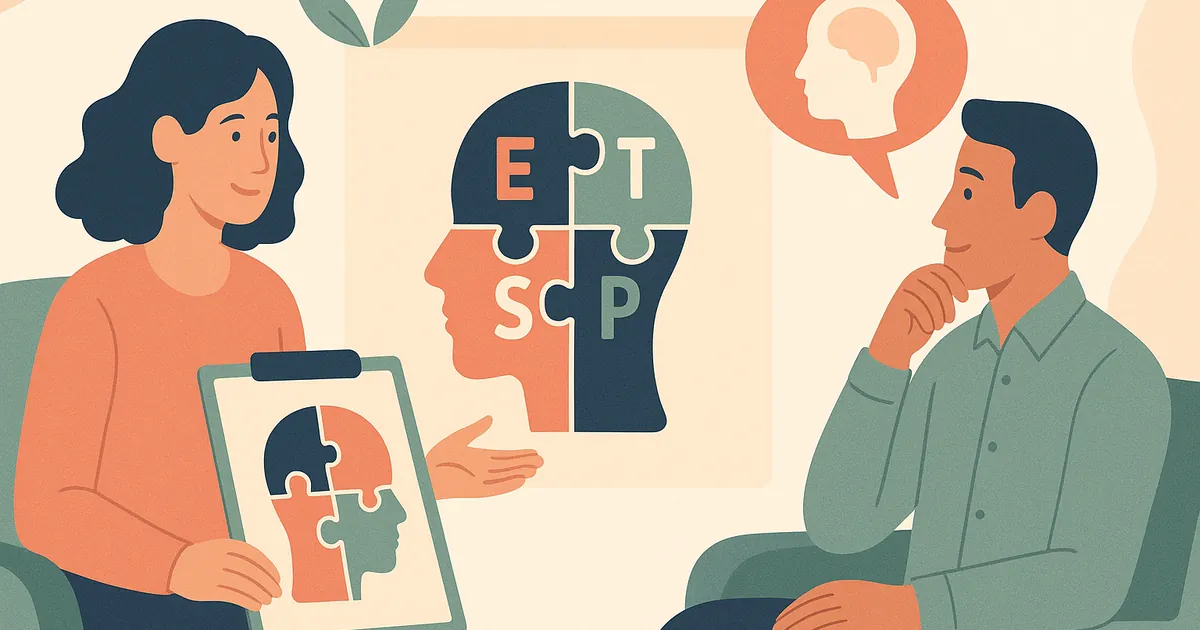
The MBTI divides personalities into 16 different types, each represented by a four-letter code. These types are based on four dichotomies, each reflecting a different aspect of personality:
Extraversion (E) vs. Introversion (I): Describes where you derive your energy from. Extraverts are energized by interactions with others, while introverts gain energy from solitary activities.
Sensing (S) vs. Intuition (N): Refers to how you process information. Sensors focus on details and tangible facts, while intuitives look at the big picture and are more abstract.
Thinking (T) vs. Feeling (F): Focuses on decision-making processes. Thinkers base decisions on logic and objective criteria, whereas feelers prioritize emotions and values.
Judging (J) vs. Perceiving (P): Represents your approach to external structures. Judgers prefer order and planning, while perceivers are spontaneous and adaptable.
Combining these preferences results in the 16 MBTI types, such as ENFP (Extraversion, Intuition, Feeling, Perceiving) and ISTJ (Introversion, Sensing, Thinking, Judging), each with unique characteristics and interaction styles.
Applying MBTI to Your Life
Understanding your MBTI type is more than just identifying your four-letter code. Here’s how you can apply it to enhance various aspects of your life:
Improving Communication with Partner: Recognize and respect your differences. For instance, if you're an ENFP and your partner is an ISTJ, understand that your spontaneous nature might clash with their preference for planning. Endeavor to find a middle ground that respects both approaches.
Career Development: Use your MBTI insights to navigate career paths. Individuals with an ISFP type, often described as creative and sensitive, might thrive in artistic professions.
Conflict Resolution: When facing conflicts, tailor your approach to align with personality types. For a thinker dealing with a feeler, acknowledging feelings before suggesting solutions can create a more productive dialogue.
Parenting Styles: Parents can adjust their strategies based on their MBTI type. An ENFJ parent might focus on nurturing and encouragement, while an ESTJ parent may emphasize rules and discipline.
Self-Awareness and Personal Growth: Regularly reflect on your MBTI type’s strengths and weaknesses, and seek personal development strategies that align with your natural tendencies.
Unique Examples or Prompts
Weekly Reflection Questions: Reflect on your dominant type preferences. "How did my intuition guide my decisions this week?"
Mindfulness Exercises: Practice an evening routine that fosters introspection, crucial for introverts needing to recharge after social activities.
Conflict Journal: Keep a journal to track and analyze conflicts, focusing on how different MBTI preferences might have influenced the outcomes.
Type Pairing Exercise: Each week, choose a different MBTI type and research how yours collaborates with this type, particularly in work or partnership scenarios.
Communication Style Experiment: For one day, consciously adapt your communication style to match a partner or colleague’s MBTI type, and note the changes in interaction dynamics.
Type-Based Hobbies: Explore hobbies that align well with your MBTI to nurture your strengths, like yoga for INFPs or debate clubs for ENTPs.
FAQ
Q1: How accurate is the MBTI in predicting behavior? A1: While the MBTI provides useful insights into personality, it should be considered a guide rather than a definitive predictor. People are complex and may exhibit behaviors outside their type.
Q2: Can the MBTI type change over time? A2: Personality types in MBTI are considered relatively stable. However, life experiences and personal growth can influence your preferences or the way they manifest.
Q3: How widely used is MBTI in professional settings? A3: MBTI is extensively used in career counseling, team-building activities, and leadership development strategies to facilitate better communication and collaboration.
Q4: Is MBTI a scientifically validated tool? A4: MBTI has been criticized for lack of scientific validation compared to other personality assessments, but it remains a popular and useful tool for personal insight.
Q5: How can MBTI assist in improving relationships? A5: By understanding the MBTI types, individuals can tailor their communication and conflict resolution strategies to fit their partner's preferences, leading to healthier interactions.
Q6: Are certain MBTI types compatible in relationships? A6: All types can be compatible, though some combinations may require more work to understand and appreciate differences in communication and behavior styles.
Internal Links
- Questions for Couples: Before Moving In "Before making a big move, address questions about personality types."
- Emotional Labor in Relationships Guide "Learn to balance emotional labor while respecting personality differences."
- Communication: Feeling Disconnected "Reconnect by understanding and applying MBTI principles in communication."
- Relationship Check-In for Busy Couples "Implement MBTI insights to maintain strong bonds despite hectic schedules."
CTA
Ready to enhance your relationship dynamics? Discover your MBTI type and take a free mental load assessment at our playground.
FAQ
- How accurate is the MBTI in predicting behavior?
- While the MBTI provides useful insights into personality, it should be considered a guide rather than a definitive predictor. People are complex and may exhibit behaviors outside their type.
- Can the MBTI type change over time?
- Personality types in MBTI are considered relatively stable. However, life experiences and personal growth can influence your preferences or the way they manifest.
- How widely used is MBTI in professional settings?
- MBTI is extensively used in career counseling, team-building activities, and leadership development strategies to facilitate better communication and collaboration.
- Is MBTI a scientifically validated tool?
- MBTI has been criticized for lack of scientific validation compared to other personality assessments, but it remains a popular and useful tool for personal insight.
- How can MBTI assist in improving relationships?
- By understanding the MBTI types, individuals can tailor their communication and conflict resolution strategies to fit their partner's preferences, leading to healthier interactions.
- Are certain MBTI types compatible in relationships?
- All types can be compatible, though some combinations may require more work to understand and appreciate differences in communication and behavior styles.