DISC in Relationships: How Your Type Affects Your Partnership
Understanding your DISC personality type can significantly impact the dynamics of your relationship. Discover how each type influences communication, conflict resolution, and emotional connection. Explore actionable steps to enhance your partnership through tailored DISC strategies.
Introduction
Have you ever found yourself in a heated debate with your partner, wondering how two people who love each other so much can view something so differently? Or maybe you feel frustrated when your partner just doesn't seem to understand your perspective. The DISC personality assessment can provide valuable insights into these situations. It helps you understand not just who you are, but how you interact with others—especially those closest to you.
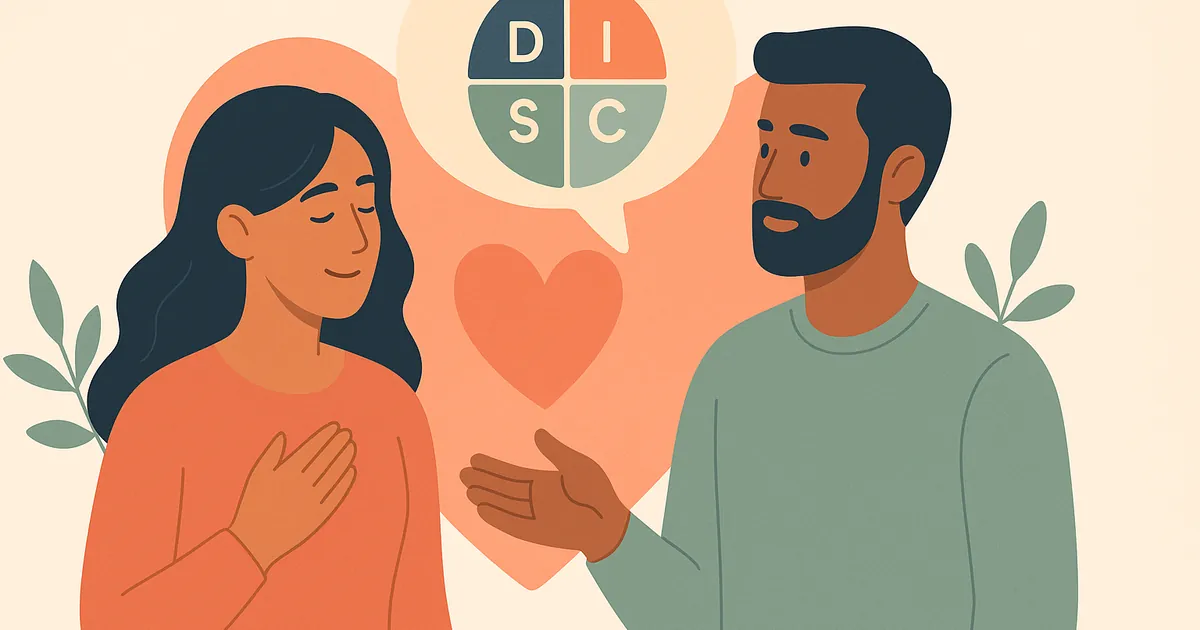
The DISC model divides personalities into four main types: Dominance (D), Influence (I), Steadiness (S), and Conscientiousness (C). Each type has distinct ways of communicating, dealing with stress, and expressing affection. For couples, identifying these traits can open the door to more effective communication, fewer misunderstandings, and a more harmonious relationship. Let’s dive into how DISC can transform your partnership for the better.
Imagine being in a relationship where conflicts resolve more quickly, conversations flow more smoothly, and emotional needs are met more frequently. By understanding your DISC profile and that of your partner, this ideal can become your reality. In this comprehensive guide, we'll first help you identify your types and then explore practical ways to leverage this understanding to improve your partnership.
Understanding the DISC Types
The DISC profile is a powerful tool originally developed by psychologist William Marston. Here's a brief overview of each type:
Dominance (D): Individuals with a high D score are often assertive, confident, and results-driven. They prefer to make decisions quickly and take charge in situations but might come off as aggressive or impatient to those with lower D scores.
Influence (I): These individuals are outgoing, enthusiastic, and persuasive. They thrive on social interaction and enjoy motivating others. However, they might struggle with focusing on details or coming to decisions without input from others.
Steadiness (S): People with strong S traits are usually reliable, patient, and good listeners. They seek harmony and often avoid conflict. While supportive, they may resist change and struggle with decisiveness.
Conscientiousness (C): These individuals value accuracy, attention to detail, and systematic approaches. They prefer to rely on data and analysis in decision-making but may come across as overly critical or reserved.
How Your DISC Type Affects Your Relationship
Communication Style: Understanding your own DISC type and that of your partner helps in crafting messages that land better. For example, D types respond well to direct and succinct communication, while S types appreciate patience and empathy.
Conflict Resolution: Conflict is inevitable, but DISC can provide strategies for resolution. D personalities might resolve disagreements by asserting their perspective, while C personalities might prefer data-driven discussions. Being aware of these tendencies allows couples to approach conflicts in a manner that suits both parties.
Emotional Connection: Differences in how love and affection are expressed can lead to misunderstandings. I types might show love extravagantly, whereas S types might show it quietly and consistently. Matching your love expressions to your partner's expectations can deepen intimacy.
Decision Making: Couples often disagree over decisions big and small. DISC helps each type understand their approach towards decision-making, whether it’s a quick leap by a D or a deliberate, detail-oriented decision by a C. Recognizing these approaches can help couples develop a balanced way to make choices together.
Family Roles and Responsibilities: The roles couples assume within their partnership can be influenced by their DISC profile, leading to a more equitable distribution of responsibilities. For example, a C type might excel in organizing finances, while an I type might be better suited to social planning.
Actionable Steps to Enhance Your Relationship Using DISC
Shared Assessments: Both partners should take the DISC assessment. Discuss the results openly to gain insights into each other’s strengths and challenges.
Create a Communication Plan: Using your DISC profiles, develop a communication strategy that highlights preferred communication methods and phrases unique to each type.
Role Allocations: Use the insights from your DISC profiles to allocate family and household roles that align with each person's natural strengths.
Conflict Strategies: Develop customized conflict resolution techniques. For instance, allow a C person time to gather information before having a critical discussion.
Regular Check-Ins: Plan regular check-ins using DISC-informed questions to ensure you're aligned on relationship goals and emotional well-being. Weekly couple meeting templates might assist in structuring these check-ins effectively.
Appreciation Rituals: Establish rituals that express appreciation in a manner that resonates with each type. For example, verbal affirmation might be more effective with I types, while tangible acts are more appreciated by S types.
Customize Love Languages: Adjust your love language based on your partner’s DISC type to strengthen emotional connections.
Discuss Future Goals: Use the DISC framework to discuss future aspirations and align on a shared vision. This could be particularly useful before making significant life changes like moving in or having children. See questions for couples before having kids to guide such discussions.
FAQ
- What are the DISC personality types?
- The DISC model defines four distinct types: Dominance, Influence, Steadiness, and Conscientiousness. Each type exhibits unique behavior patterns and influences how individuals interact in relationships.
- How can the DISC assessment improve my relationship?
- By understanding both your own and your partner's DISC types, you can improve communication, resolve conflicts more amicably, and meet each other’s emotional needs more effectively.
- Can two people with the same DISC type have a successful relationship?
- Yes, two people with the same type can have a successful relationship, although they might face specific challenges related to too many similarities in behaviors. Understanding and compensating for these can lead to a balanced partnership.
- Are there any drawbacks to using DISC in relationships?
- The primary drawback can be over-reliance on DISC types, which might lead to stereotyping or making assumptions without exploring deeper individual differences. It's a tool for insight, not a definitive guide.
- Is DISC useful for addressing the mental load in relationships?
- Absolutely. DISC can help identify how different personality types perceive and handle the mental load, enabling more balanced distribution of responsibilities.
- How often should couples revisit their DISC assessments?
- Couples are encouraged to revisit their DISC assessments whenever significant life changes occur or annually to reassess compatibility and communication strategy.