What is DISC? Understanding Your Communication Style
Discover how the DISC personality assessment can transform your communication in personal and professional relationships. Explore how understanding your DISC profile aids in fostering effective dialogue, minimizing conflicts, and enhancing overall relationship satisfaction.
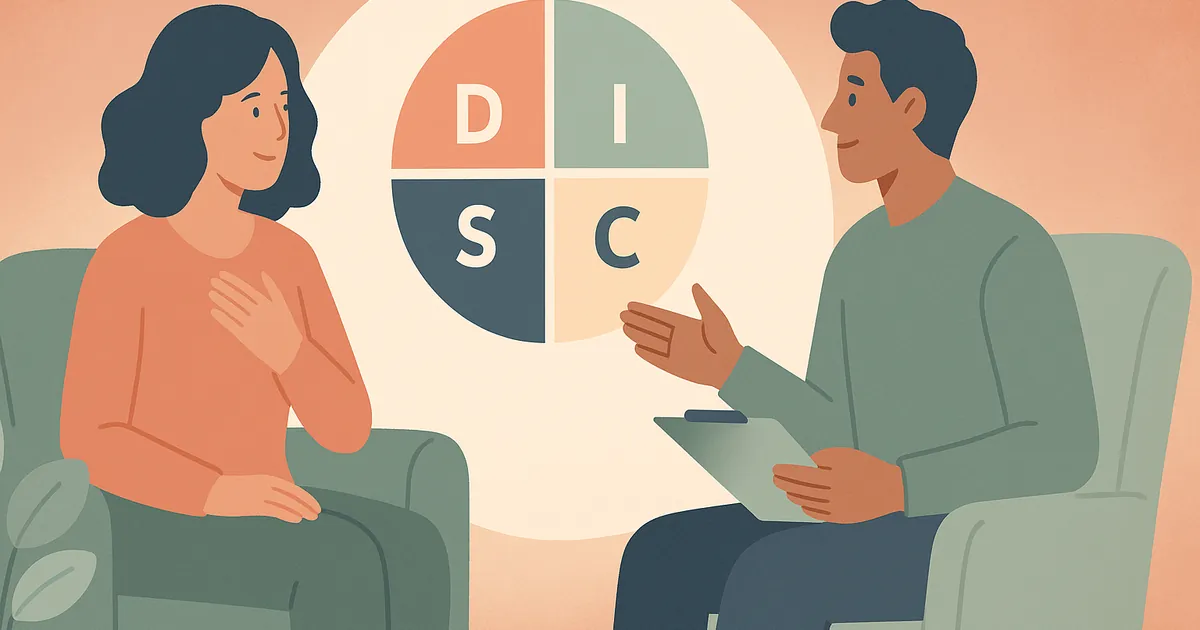
Have you ever found yourself in a conversation where no matter how hard you try, the other person just doesn't seem to understand you? Maybe you’ve felt that despite speaking the same language, a colleague, friend, or even your partner seems to live on a completely different wavelength? If so, you're not alone. Understanding the intricacies of communication can be as complex as deciphering an ancient language. But what if there were a tool that could decode this complexity and help you communicate more effectively with anyone? Enter DISC, a personality assessment tool that offers insights into your unique communication style.
Introduction to DISC
DISC is a behavioral assessment tool that categorizes individuals based on four distinct personality traits: Dominance, Influence, Steadiness, and Conscientiousness. Developed by psychologist William Marston in the 1920s, DISC has evolved into a widely respected framework for understanding human behavior and enhancing communication. At its core, DISC is about recognizing your natural tendencies and adapting your communication style to interact more effectively with others.
For instance, someone with a Dominant personality might be direct and assertive, often preferring straightforward communication. Meanwhile, a person with an Influential personality might thrive on energetic conversations and enjoy being persuasive. On the other hand, individuals with Steadiness as their primary trait are typically supportive and prefer a collaborative approach. Lastly, Conscientious individuals value accuracy and detail, often leaning towards data-driven discussions.
Understanding Your DISC Profile
Knowing your DISC profile allows you to gauge how you typically interact in various environments—whether at home, work, or in social settings. This self-awareness is not only beneficial for personal growth but also pivotal in enhancing your interaction with others. Here’s how you can navigate your relationships effectively using the DISC model:
Identify and Understand Your Profile: The first step is identifying your primary DISC trait. Take a DISC assessment and spend some time understanding what each letter signifies for you. What strengths do these traits highlight? What are possible challenges?
Adapt Your Communication Style: Once you know your DISC profile, you can consciously adjust how you communicate depending on who you're interacting with. For example, if you're a Dominant type but engaging with someone who is more Steady, you might need to slow down, provide reassurance, and invite collaboration.
Leverage Your Strengths: Play to your strengths based on your DISC profile. If you're naturally an Influencer, use your enthusiasm to motivate and engage others. If you're a Conscientious type, harness your attention to detail to ensure thorough planning and analysis are brought to any conversation.
Recognize Others’ Styles: While it helps to know your own style, it's equally important to recognize the DISC traits in others. This recognition will allow you to tailor your interactions, minimizing misunderstandings and increasing productivity and satisfaction.
Practice and Feedback: Practice these adjustments and seek feedback. Understanding your DISC profile is not a one-time task but an ongoing journey. Ask for feedback from colleagues, friends, and loved ones to ensure your communication methods are effective.
DISC Profiles and Communication Scenarios
Here are some common scenarios and strategies for using the DISC assessment to navigate them:
Workplace Meetings: For Dominant types, meetings can become a platform to assert their ideas. However, if Steadiness or Conscientious individuals are involved, Dominant individuals should focus on listening, encouraging participation from all members to ensure collaborative decision-making.
Conflict Resolution: In conflicts, Influencers should be mindful to listen rather than dominate conversation flow, allowing Steady types to share their points of view genuinely.
Relationship Building: For Conscientious individuals focusing on logic and thorough analysis, shifting to a more personable and open approach can be valuable when building personal relationships with Influencers or Dominants who might appreciate directness and charisma.
Actionable DISC Prompts
Weekly Reflection: At the end of each week, reflect on a conversation that went well and analyze what DISC traits were beneficial. Where did you adapt, and how could you improve?
Role-Play Exercises: Engage in role-playing exercises with friends or colleagues to simulate different DISC interactions. This will help practice adaptive communication.
Feedback Sessions: Schedule regular feedback sessions where you ask how your communication style affects your team or partner. Use this feedback to adjust your approach.
Developing Empathy: Use your understanding of DISC to cultivate empathy by acknowledging the diverse perspectives different traits bring to the table.
Goal Setting: Set specific communication goals based on your DISC profile, such as becoming more patient if you're Dominant or more decisive if you're Steady.
FAQs
Q1: What is the main goal of the DISC assessment? A1: The main goal of the DISC assessment is to help individuals understand their communication style and behavior tendencies, enhancing their ability to interact more effectively with others.
Q2: Can DISC profiles change over time? A2: While core tendencies often remain stable, it's possible for DISC profiles to shift due to significant life changes or deliberate personal development efforts.
Q3: How can I use DISC to improve my work life? A3: By understanding your own DISC style and that of your colleagues, you can tailor your communication to match their preferences, which can improve teamwork, productivity, and work relationships.
Q4: Is DISC suitable for personal relationships? A4: Yes, DISC can be incredibly beneficial in personal relationships by facilitating understanding between partners, leading to increased empathy and reduced conflict.
Q5: Are there any limitations to the DISC assessment? A5: While DISC provides valuable insights into behavior and communication, it does not account for every nuance of personality and should be used in conjunction with other tools for a comprehensive understanding.
Q6: How do I take a DISC assessment? A6: DISC assessments are available through various online platforms, and some employers may also offer them as part of development programs.
Internal Links
Learn about communication hard conversations to better handle conflicts in your relationships.
Explore MBTI in relationships to understand how different personality assessments correlate and complement each other.
Recognize the mental load in relationships to further enhance communication and relationship satisfaction.
Discover how to improve communication through listening exercises.
Check out our guide on communication needs and expectations to align with your partner’s style.
Conclusion
Understanding and applying the DISC framework in your relationships can transform how you communicate, resolve conflicts, and build connections. By recognizing the different personalities and adapting your approach, you can communicate more efficiently and harmoniously in all areas of your life. Curious to learn more about your role in mental load management? Take our free assessment in the playground and start improving your relationships today!
FAQ
- What is the main goal of the DISC assessment?
- The main goal of the DISC assessment is to help individuals understand their communication style and behavior tendencies, enhancing their ability to interact more effectively with others.
- Can DISC profiles change over time?
- While core tendencies often remain stable, it's possible for DISC profiles to shift due to significant life changes or deliberate personal development efforts.
- How can I use DISC to improve my work life?
- By understanding your own DISC style and that of your colleagues, you can tailor your communication to match their preferences, which can improve teamwork, productivity, and work relationships.
- Is DISC suitable for personal relationships?
- Yes, DISC can be incredibly beneficial in personal relationships by facilitating understanding between partners, leading to increased empathy and reduced conflict.
- Are there any limitations to the DISC assessment?
- While DISC provides valuable insights into behavior and communication, it does not account for every nuance of personality and should be used in conjunction with other tools for a comprehensive understanding.
- How do I take a DISC assessment?
- DISC assessments are available through various online platforms, and some employers may also offer them as part of development programs.